Tuesday, 4 March 2014

Angkor, Cambodia (UNESCO)

 
Angkor is one of the most important archaeological sites in South-East Asia. Stretching over some 400 km2, including forested area, Angkor Archaeological Park contains the magnificent remains of the different capitals of the Khmer Empire, from the 9th to the 15th century. They include the famous Temple of Angkor Wat and, at Angkor Thom, the Bayon Temple with its countless sculptural decorations. UNESCO has set up a wide-ranging programme to safeguard this symbolic site and its surroundings.
 
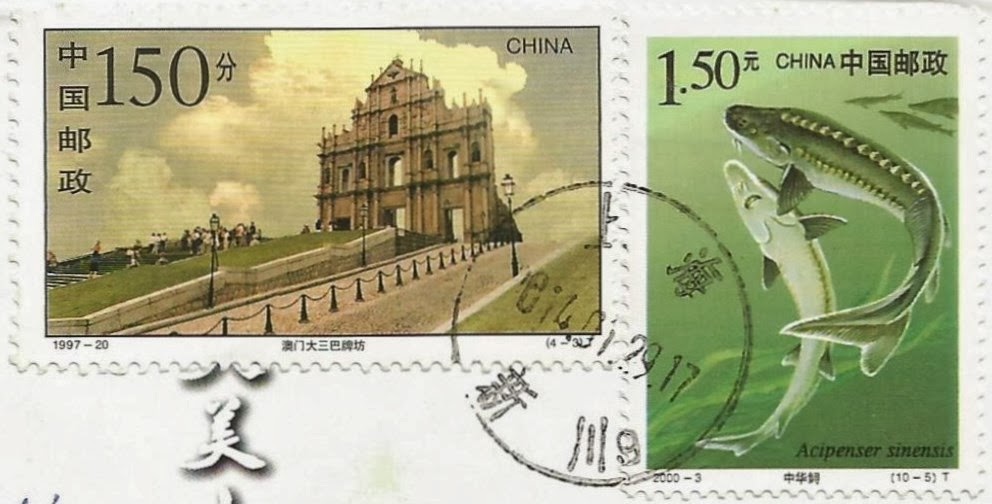
Postcard 1 : Angkor Wat
 
 
Sender: Pjsubway, Sent on: 25 Mar, 2014, Received on: 10 Apr, 2014, Travel time: 15 days
Sent from Siem Reap - Angkor
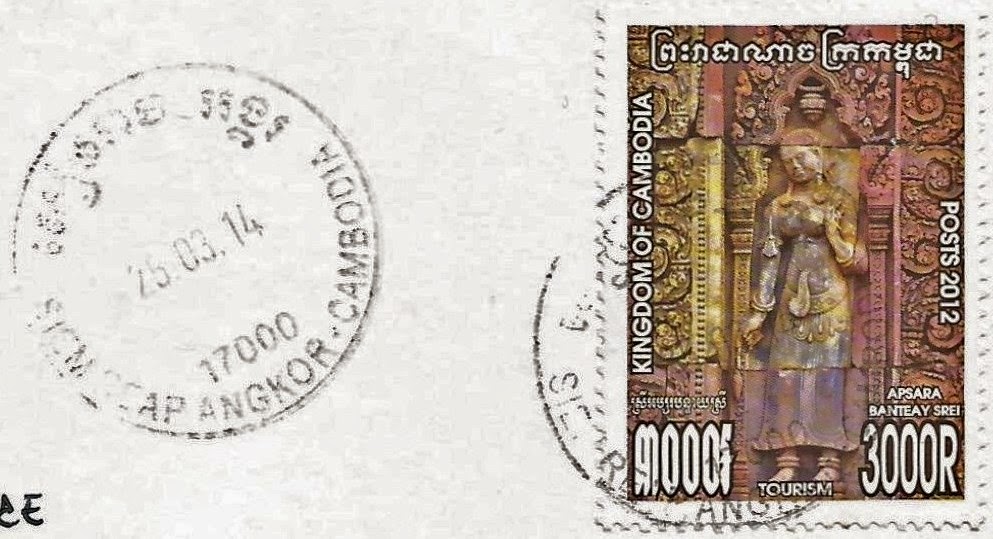
 
Postcard 2 : Angkor Wat
 
 
Sender: Janet, Sent on: 2 Feb, 2014, Received on: 24 Feb, 2014, Travel time: 22 days
Sent from Phnom Penh

Rideau Canal, Canada (UNESCO)

http://whc.unesco.org/en/list/1221

The Rideau Canal, a monumental early 19th-century construction covering 202 km of the Rideau and Cataraqui rivers from Ottawa south to Kingston Harbour on Lake Ontario, was built primarily for strategic military purposes at a time when Great Britain and the United States vied for control of the region. The site, one of the first canals to be designed specifically for steam-powered vessels, also features an ensemble of fortifications. It is the best-preserved example of a slackwater canal in North America, demonstrating the use of this European technology on a large scale. It is the only canal dating from the great North American canal-building era of the early 19th century to remain operational along its original line with most of its structures intact.

Sender: jasondavidsforum, Sent on: 28 Jan, 2014, Received on: 24 Feb, 2014, Travel time: 27 days

Ancient City of Ping Yao, China (UNESCO)

http://whc.unesco.org/en/list/812

Ping Yao is an exceptionally well-preserved example of a traditional Han Chinese city, founded in the 14th century. Its urban fabric shows the evolution of architectural styles and town planning in Imperial China over five centuries. Of special interest are the imposing buildings associated with banking, for which Ping Yao was the major centre for the whole of China in the 19th and early 20th centuries.

Sender: Linuswu, Sent on: 29 Jan, 2014, Received on: 24 Feb, 2014, Travel time: 26 days

China Danxia, China (UNESCO)

http://whc.unesco.org/en/list/1335/

China Danxia is the name given in China to landscapes developed on continental red terrigenous sedimentary beds influenced by endogenous forces (including uplift) and exogenous forces (including weathering and erosion). The inscribed site comprises six areas found in the sub-tropical zone of south-west China. They are characterized by spectacular red cliffs and a range of erosional landforms, including dramatic natural pillars, towers, ravines, valleys and waterfalls. These rugged landscapes have helped to conserve sub-tropical broad-leaved evergreen forests, and host many species of flora and fauna, about 400 of which are considered rare or threatened.

The six inscribed danxia landform areas are: 
1-Mount Langshan and Mount Wanfoshan (Hunan Province)
2-Mount Danxia (Guangdong Province)
3-Taining and Guanzhishan (Fujian Province)
4-Mount Longhu and Guifeng (Jiangxi Province) 
5-Fangyan, Mount Jianglang (Zhejiang Province)
6-Mount Chishui (Guizhou Province)

The total core area of 6 regions above is 73945 ha, and the total buffer area is 65446 ha.

Postcard 1 : Zhangye Danxia Landform (Danxia Geopark)

The Zhangye Danxia Landform is concentrated predominantly in Linze and Sunan counties in Gansu Province. It is both the largest and the most typical of China’s arid area Danxia landform.
Danxia landforms in Kangle Township, Sunan Uygur Autonomous County, are the best evolved examples in China of window lattice and palace forms.


Sender: Linuswu, Sent on: 29 Jan, 2014, Received on: 24 Feb, 2014, Travel time: 26 days

Classical Gardens of Suzhou, China (UNESCO)

http://whc.unesco.org/en/list/813

Classical Chinese garden design, which seeks to recreate natural landscapes in miniature, is nowhere better illustrated than in the nine gardens in the historic city of Suzhou. They are generally acknowledged to be masterpieces of the genre. Dating from the 11th-19th century, the gardens reflect the profound metaphysical importance of natural beauty in Chinese culture in their meticulous design.

Sender: Linuswu, Sent on: 29 Jan, 2014, Received on: 24 Feb, 2014, Travel time: 26 days

Huanglong Scenic and Historic Interest Area, China (UNESCO)

http://whc.unesco.org/en/list/638

Situated in the north-west of Sichaun Province, the Huanglong valley is made up of snow-capped peaks and the easternmost of all the Chinese glaciers. In addition to its mountain landscape, diverse forest ecosystems can be found, as well as spectacular limestone formations, waterfalls and hot springs. The area also has a population of endangered animals, including the giant panda and the Sichuan golden snub-nosed monkey.

Sender: Wonglingchih, Sent on: 8 Feb, 2014, Received on: 27 Feb, 2014, Travel time: 19 days

Flag of China


Red with a large yellow five-pointed star and four smaller yellow five-pointed stars (arranged in a vertical arc toward the middle of the flag) in the upper hoist-side corner; the color red represents revolution, while the stars symbolize the four social classes - the working class, the peasantry, the urban petty bourgeoisie, and the national bourgeoisie (capitalists) - united under the Communist Party of China.

Sender: Haley1994, Sent on: 27 Jan, 2014, Received on: 27 Feb, 2014, Travel time: 31 days